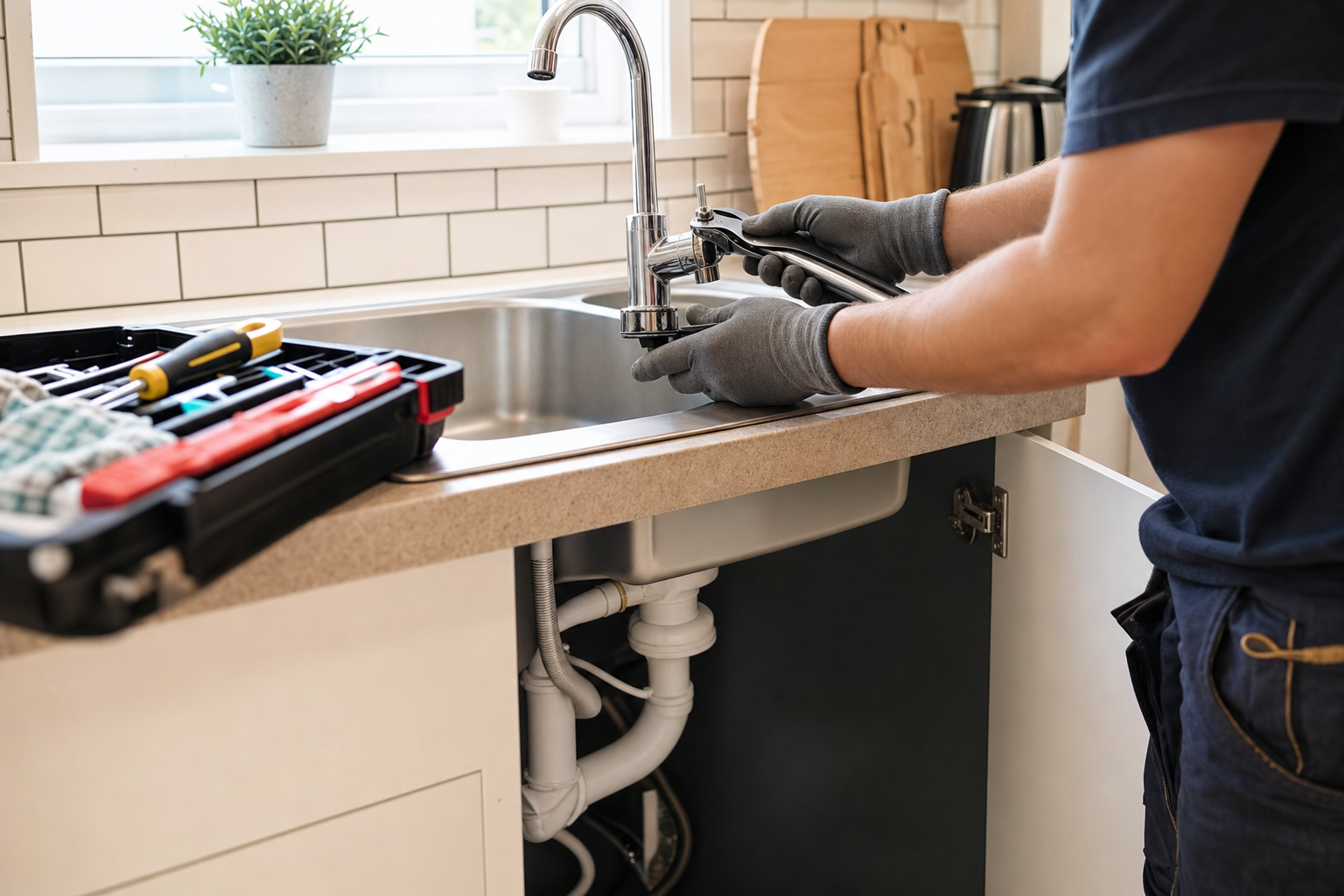
If you need kitchen plumbing Chigwell Row, Plum-8 Plumbing & Electrical provides practical help with the parts of the kitchen that most often cause disruption: sinks, taps, appliance connections, waste pipes, isolation valves and leak points under the units. Kitchen plumbing is not just about fitting a new item. It is about making sure water enters, drains and isolates safely, with the right connections for the appliance or fixture and no hidden leaks left behind.
Kitchen issues often start small. A tap that drips, a washing machine hose that weeps, a dishwasher that leaves water in the base, or a waste pipe that smells or drips after use can all point to a fault in a fitting, seal, valve or connection. In many homes around Chigwell Row, and nearby areas such as Hainault Forest Country Park, Grange Hill, Chigwell Station and Loughton, these problems are often noticed only when cupboards are opened or when water appears on the floor. That is why a careful inspection matters: it helps identify whether the issue is at the appliance, the tap, the sink waste, the trap, the supply pipe or the isolation valve.
We support homeowners, landlords, tenants and kitchen fitters with clear, service-specific kitchen plumbing help. If you are planning a new appliance installation, dealing with a leak, or replacing a sink or tap, the aim is the same: get the kitchen working properly and reduce the risk of damage to cabinets, flooring and adjoining rooms. Call 020 3656 5358 or request a visit today.
Our kitchen plumbing work commonly includes washing machine installations Chigwell Row, dishwasher installations Chigwell Row, mixer tap repairs and installations Chigwell Row, kitchen water leak repairs Chigwell Row, food and waste disposal unit installations and replacements Chigwell Row and kitchen sink installations Chigwell Row. We also help with related plumbing issues such as water leaks, emergency plumbing call-outs, boiler repairs, boiler installations, central heating, underfloor heating and gas engineering work where relevant and properly qualified.
Washing Machine Installations in Chigwell Row
A washing machine installation should be more than plugging in an appliance and turning on the tap. The water supply hose, isolation valve, waste hose and drainage point all need to be checked so the machine can fill and empty correctly without leaking. A poor connection can lead to water coming from the valve, the hose end, the standpipe or the waste outlet, and in a kitchen this can quickly affect base units and flooring.
Common signs that a washing machine connection needs attention include dripping at the valve, damp behind the appliance, a hose that feels loose, slow emptying, or water appearing after a rinse cycle. If a machine has recently been moved, replaced or reconnected, the problem may simply be a poor seal or a hose not sitting correctly. In some cases the isolation valve may be stiff, partially seized or not fully closing, which makes safe isolation difficult if a fault develops later.
For safety, customers should not force old valves, overtighten hoses or run the appliance if they can see active leaking. Water and electrics are close together in a typical kitchen layout, so even a small drip can become a larger issue if it reaches sockets, plinths or hidden pipework. Our approach is to inspect the visible connections, check the valve, test the hose and confirm the appliance is running without leaks during a cycle. This is the same practical method used on local jobs where washing machine connections were inspected, refitted and tested during a rinse cycle.
If your kitchen is being refitted by a kitchen fitter or you are replacing an appliance as a tenant or homeowner, it is sensible to plan the plumbing first. That helps avoid last-minute delays, damaged fittings and repeated call-backs.
Dishwasher Installations in Chigwell Row
Dishwasher installations need the same level of care as washing machine connections, but the symptoms can be less obvious because the machine is enclosed behind a cupboard front. A dishwasher may appear to work normally while still leaking slowly from the inlet, waste hose, pump connection or under-sink fittings. Sometimes the first sign is a smell, a damp patch inside the cupboard, or water pooling after a wash cycle.
When installing a dishwasher, the supply hose, waste hose, trap connection and any isolation valve need to be correctly matched and secured. The appliance also needs enough room for the hoses to sit without kinking or being crushed when the machine is pushed back into place. If a waste hose is routed badly, it can cause poor drainage or backflow. If the inlet connection is not seated properly, a slow leak may only show up after the machine has been running for some time.
What customers should not DIY here is anything that involves altering pipework under the sink without understanding the layout. A kitchen waste system may already carry a sink, washing machine and dishwasher on the same branch. Changing one connection without checking the others can create flow problems, smells or leaks. If you are unsure whether the dishwasher is connected to the correct trap, valve or waste point, it is safer to have it checked before damage spreads to the cabinet base.
For landlords and tenants, this is especially important because a hidden dishwasher leak can go unnoticed until the property has already suffered damage. A proper installation and test cycle give peace of mind that the appliance is draining as intended.
Mixer Tap Repairs and Installations in Chigwell Row
Mixer taps are one of the most used components in the kitchen, so faults are common. A tap may drip from the spout, spray from the base, feel loose at the sink deck, or become difficult to turn on and off. In many cases the issue is with the cartridge, washers, O-rings, flexible tails or the body fixing under the sink. If the tap is old, corroded or badly scaled, replacement may be more practical than repeated repairs.
Typical symptoms include:
- Persistent dripping after the tap is turned off
- Water pooling around the base of the tap
- Reduced flow from hot or cold side only
- Stiff handles or inconsistent temperature control
- Noise or vibration when the tap is opened
Customers should not force a stiff mixer tap or try to dismantle the cartridge without isolating the water first. Under-sink valves can be old, seized or partially working, and a simple repair can become a bigger leak if the wrong fitting is disturbed. It is also easy to overtighten the tap body from above, which can damage the sink or worktop and still not stop the movement or leak.
We help with mixer tap repairs and installations in Chigwell Row by checking the tap body, supply connections and isolation valves, then testing the result under normal use. If a replacement is needed, the new tap should suit the sink, water pressure and kitchen layout. That is particularly relevant in older properties near Chigwell Row Village and surrounding roads, where previous alterations may mean the existing fittings are not standard.
Kitchen Water Leak Repairs in Chigwell Row
Kitchen water leaks can come from many places: the sink waste, trap, tap tails, appliance hoses, isolation valves, joints behind the cupboard, or the supply pipe feeding the kitchen. The challenge is that water often travels before it is seen. A leak may show up at the front of the cabinet even though the actual fault is at the back or beneath the sink.
Signs of a kitchen leak include damp cupboard bases, swollen chipboard, mouldy smells, staining on pipework, dripping sounds after use, or water marks on the floor. Some leaks only appear when the sink is emptied or the dishwasher runs. Others are constant, but very slow, and can be missed until the cabinet starts to deteriorate.
When diagnosing a leak, it helps to check the system in stages: look at the tap, then the supply tails, then the waste and trap, then appliances and their hoses. A kitchen leak is often caused by a loose compression joint, a worn washer, a split hose or a trap that is not seated correctly. In some cases the issue is not the plumbing fitting itself but the way the appliance or sink was installed, so checking the whole arrangement matters.
What customers should not DIY is any repair that involves reaching behind a fitted appliance, cutting pipework without proper isolation, or using sealant as a quick fix on a live leak. Sealant can hide the problem rather than solve it, and water may continue tracking into the unit. If the leak is active, isolating the water supply and getting the fault assessed is the safer option. We provide practical kitchen water leak repairs in Chigwell Row and can also support wider water leak concerns where the source is not immediately obvious.
Food and Waste Disposal Unit Installations and Replacements in Chigwell Row
Food and waste disposal units need careful installation because they combine water, drainage and mechanical operation. The unit must be fitted securely, connected to the correct waste system and checked for leaks at each joint. The surrounding sink, trap and pipework also need to suit the unit so that drainage remains reliable and odours do not build up.
Common reasons for replacement include poor performance, repeated blockages, leaks from the unit body or connections, unusual noise, or a unit that no longer clears waste effectively. In some kitchens, the existing pipework or under-sink layout may not be suitable for a disposal unit, so a replacement must be planned around the actual space and drainage route rather than simply swapping the appliance in place.
Customers should not DIY this type of work unless they fully understand the waste layout and electrical isolation involved. A disposal unit can damage pipework or leak if it is not mounted correctly, and a blocked or misrouted waste system can affect the kitchen sink as well. If the unit is connected to a shared waste arrangement, the sink and dishwasher may also be impacted. That is why checking the whole under-sink setup is important before fitting or replacing one.
For kitchen fitters and landlords, a professional check can help avoid call-backs after handover. We can assess whether a disposal unit is suitable for the existing sink and waste system, then install or replace it with the rest of the kitchen plumbing in mind.
Kitchen Sink Installations in Chigwell Row
A kitchen sink installation involves more than placing the bowl into the worktop. The sink must be seated correctly, sealed properly and connected to the waste, trap and supply lines without leaks. The tap, waste fittings and any appliance connections also need to be aligned so the whole system works together. If the sink is poorly installed, water can get under the rim, into the cabinet or around the waste joints and cause hidden damage.
Customers often notice signs such as a loose sink, water under the cabinet, staining around the waste, or movement when the tap is used. In some cases the issue is not the sink itself but the seal between the sink and worktop, or the way the waste has been tightened. If the sink is being replaced during a refit, it is worth checking the condition of the isolation valves, tap tails and nearby pipework at the same time.
What customers should not DIY is cutting or altering the waste and supply pipework without checking the full layout first. A small error in alignment can create leaks that only appear later, once the sink has been used several times. It is also easy to over-rely on sealant when the real issue is a misfit or incorrect connection. The better approach is to install the sink, test the waste, run the tap, and confirm there are no drips or seepage points before the area is put back into use.
We support kitchen sink installations in Chigwell Row for homeowners, tenants, landlords and kitchen fitters who want the plumbing side handled carefully and tested properly. If your kitchen is close to Chigwell Station, Grange Hill or the roads leading towards Hainault Forest Country Park, we can help with local kitchen plumbing support and practical advice on the next step.
Plum-8 Plumbing & Electrical is focused on clear diagnosis, sensible repairs and straightforward customer advice. We do not encourage unnecessary work. Instead, we look at the symptom, identify the likely component, check the surrounding fittings and explain what should be done next. That can include a repair, a replacement, or a recommendation to address a related plumbing issue before it becomes a bigger problem.
If you need help with kitchen plumbing in Chigwell Row, or you are unsure whether the fault is the tap, sink, waste, appliance connection or supply valve, call 020 3656 5358 or email info@plumbers-chigwell-row.co.uk. We are available 24 hours and can help you decide the safest next step for your kitchen.